SOC 2 Type 1 vs Type 2: The Polaroid vs The Reality Show
A prospective enterprise customer emails back after weeks of product demos: “Please provide your SOC 2 Type 2 report so procurement can clear your vendor assessment.”
The sales lead forwards the email to engineering with high spirits. The team just completed their audit last Friday, received a pristine 45-page PDF from a reputable CPA firm, and replies within twenty minutes with the attached file.
Forty-eight hours later, the procurement officer responds with a one-sentence rejection: “This is a Type 1 report. We require Type 2 covering at least six months of operational history. Let us know when your Type 2 window closes.”
The deal stalls indefinitely.
The Real Estate Photo vs The Uncut Reality Show
SOC 2 is an auditing procedure developed by the American Institute of CPAs (AICPA) to verify how technology vendors handle customer data across security, availability, and confidentiality.
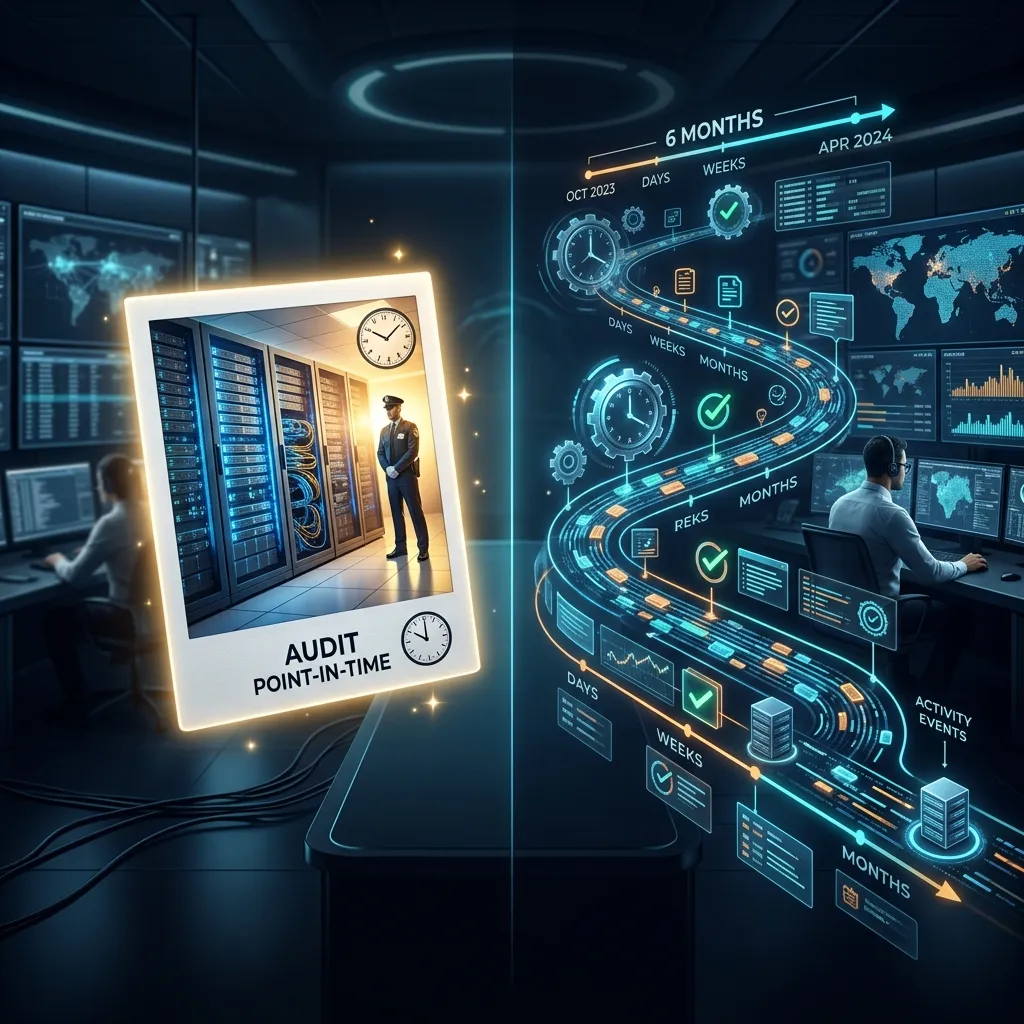
A SOC 2 Type 1 report is like staging your apartment for a real estate listing photo. You shove dirty laundry under the bed, tuck crusty pans into the oven, spray citrus air freshener across the living room, and hold your breath while the photographer snaps the picture. That photograph legally proves your apartment looked clean at 2:15 PM on a Tuesday.
A SOC 2 Type 2 report is like having an unedited reality documentary crew move into your guest bedroom for six months. They watch you make oatmeal on sleepy Monday mornings. They see whether you actually wipe the kitchen counters on Friday night. They inspect whether unwashed mugs pile up in the sink when you are rushing to meet a deadline.
The analogy breaks down in one critical way: on a reality television show, leaving dishes in the sink creates entertaining drama for the audience. In a SOC 2 Type 2 report, an engineer merging code directly to the main branch without peer review or an employee missing multi-factor authentication on their cloud account produces an auditor exception on page 32. That exception is delivered directly to your customer’s Chief Information Security Officer.
What the Auditor Actually Evaluates
The fundamental difference comes down to design versus operational effectiveness over time.
Type 1: Point-in-Time Design
A Type 1 examination evaluates whether your security controls are suitably designed as of a specific date.
The auditor checks your written documentation and inspects system settings on that designated day:
- Do you have a written access control policy requiring multi-factor authentication?
- Is production database access restricted by firewall rules right now?
- Is hard drive encryption enabled on the laptops shown during the walkthrough?
If your policies exist and the controls are configured on the examination date, you pass. You can spend Monday morning scrambling to turn on settings, pass the audit on Tuesday afternoon, and turn them off Wednesday morning without violating the scope of a Type 1 report.
Enterprise buyers know this, which is why Type 1 rarely clears vendor risk assessments for software handling sensitive customer data.
Type 2: Operating Effectiveness Across Months
A Type 2 examination evaluates whether those controls operated effectively over a defined observation window, typically six or twelve months.
The auditor does not take your word for it, nor do they look at a single afternoon:
- They request a random sample of thirty code pull requests merged between January and June to check if every single one had an approved peer review from another engineer before deployment.
- They match employee resignation dates from HR against directory service audit logs to verify whether production accounts were terminated within your policy’s mandated twenty-four-hour window.
- They pull automated alerts from cloud monitors to check whether security incidents were acknowledged within documented service level agreements.
Passing Type 2 requires continuous operational discipline. A single unreviewed hotfix deployed at 3 AM during a production outage in April can surface as an audit exception in November.
Three Traps That Spoil a Type 2 Observation Window
Teams pursuing their first Type 2 report frequently stumble over predictable operational seams:
1. The Friday Emergency Push
An engineer fixes a critical billing bug under immense customer pressure. To restore service immediately, they push straight to main using an administrator bypass or approve their own pull request.
Months later, the auditor’s sampling script flags that exact pull request. Because the change control policy explicitly states “all production code changes require independent review prior to deployment,” that emergency fix becomes a formal control deviation.
2. The Zombie Contractor Account
A contract designer finishes their deliverables on March 15. The product manager thanks them on Slack, but neglects to notify IT or file an offboarding ticket.
The contractor’s Google Workspace and GitHub accounts sit idle until a routine cleanup in May. When auditors compare vendor contract end dates against directory deprovisioning timestamps, they discover a two-month gap. The finding notes that access remained active long after the business relationship concluded.
3. The Unlinked Jira Ticket
Engineering teams often maintain a strict policy that every production pull request must reference an authorized issue ticket. In the middle of a sprint, an engineer opens a quick pull request titled fix typo in header without linking an issue tracker ticket.
To an engineer, it is an inconsequential two-line change. To an auditor evaluating change authorization controls, it is unapproved code deployed to production.
Building Guardrails Instead of Relying on Memory
Relying on human memory to maintain compliance across 180 consecutive days guarantees failure. Engineering teams that navigate Type 2 audits smoothly replace manual memory with hard technical guardrails:
# Example: Enforce branch protection via GitHub API so humans physically
# cannot bypass peer reviews during the observation window
gh api -X PUT repos/:owner/:repo/branches/main/protection \
  -F "required_status_checks[strict]=true" \
  -F "enforce_admins=true" \
  -F "required_pull_request_reviews[required_approving_review_count]=1" \
  -F "required_pull_request_reviews[dismiss_stale_reviews]=true"
When branch protection rules require independent peer review and enforce the rule on repository administrators (enforce_admins=true), an engineer cannot bypass the control even during a late-night incident. The system enforces the policy automatically, generating pristine evidence for the audit sample.
Similarly, integrating identity provider deprovisioning directly with HR systems ensures that terminating a contractor in payroll automatically revokes SSO credentials within minutes, eliminating offboarding lag entirely.
Type 1 proves you know what good security looks like on paper. Type 2 proves your engineering habits hold up when real work gets messy.
What was the most frustrating or unexpected finding an auditor flagged during your team’s SOC 2 observation window?