SMR Co-Pilot: Nuclear Compliance Assistant
The Challenge
Nuclear projects involve thousands of pages of strict regulatory requirements. A single missed standard in an Environmental Impact Assessment (EIA) can delay a project by years.
The Result
Automated the cross-referencing of project documents against global standards like IAEA, LEP 2020, and VARANS.
The Challenge: Navigating the Most Regulated Industry on Earth
In the nuclear sector, compliance is the product. Founders and engineers must ensure that every technical document aligns perfectly with national and international standards (IAEA). Manually checking an 800-page Environmental Impact Assessment (EIA) for gaps against new regulations is a task that takes human teams weeks of tedious work.
The goal was to build a system that acts as a “Regulatory Watchdog,” identifying gaps and generating compliant documentation in real-time.
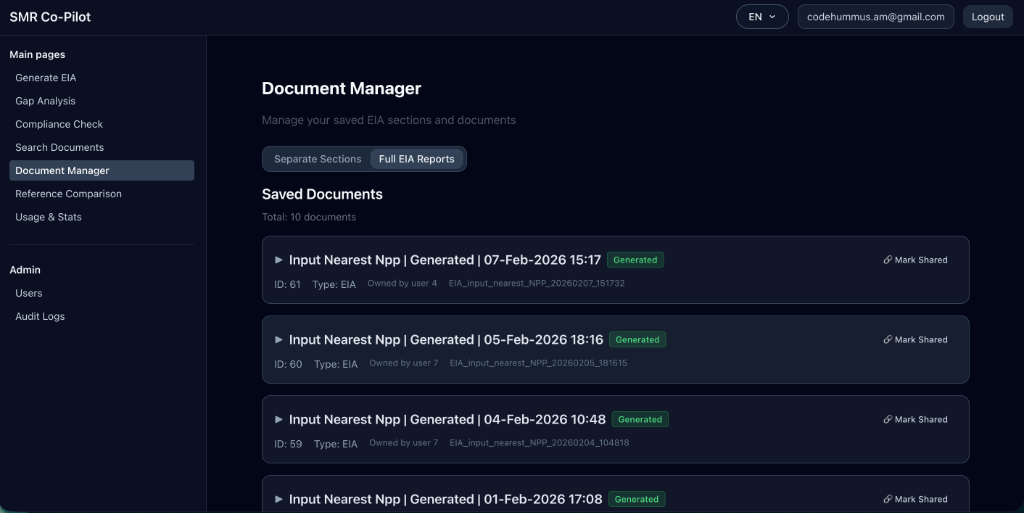 Centralized document repository for nuclear project compliance and regulatory search.
The Compliance-First Solution
We built a specialized RAG (Retrieval-Augmented Generation) system that understands the hierarchical structure of nuclear regulations.
1. Automated EIA Generation
Instead of starting from a blank page, the Co-Pilot helps engineers generate the first drafts of complex documents like EIAs. It pulls from a verified database of past successful filings and current regulatory requirements to ensure the foundation is solid.
2. Regulatory Gap Analysis
The core of the system is the Gap Analysis Engine. Users can upload a document and instantly see where it falls short of specific standards (e.g., IAEA Safety Standards or VARANS). The AI flags the missing information and suggests the exact wording needed to reach compliance.
3. Smart Reference Comparison
Regulations change. SMR Co-Pilot tracks these changes, allowing users to compare current project documents against different versions of a law or different international standards simultaneously.
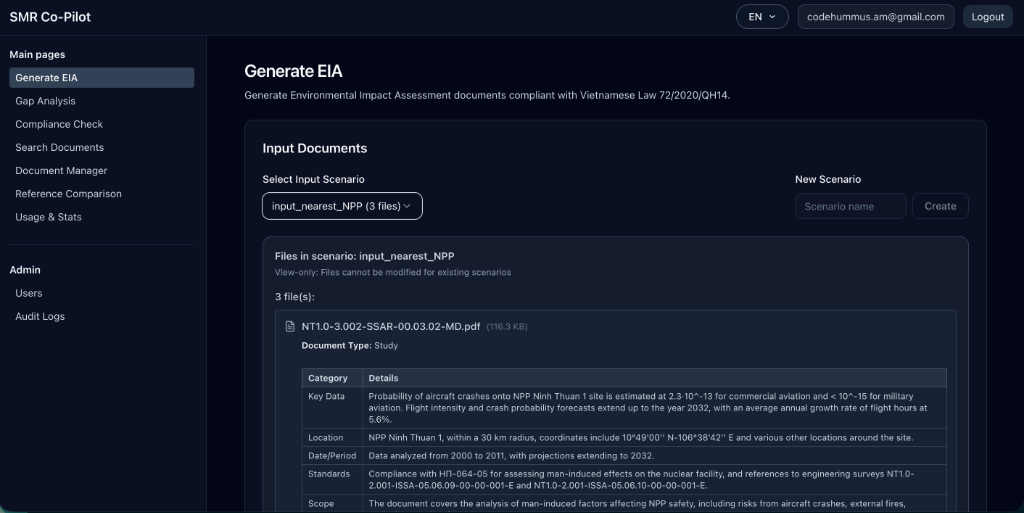 Real-time regulatory gap analysis flagging missing requirements in an Environmental Impact Assessment.
The Impact for the Project
- Risk Mitigation: Identifying regulatory gaps early in the process prevents costly delays and redesigns later in the project lifecycle.
- Speed to Filing: Document generation time was reduced from weeks to days, allowing teams to focus on engineering rather than formatting.
- Centralized Knowledge: Every member of the team now has instant access to the latest global nuclear standards through a single, intelligent interface.